Women, Water and Science: Citizen Science in Tanzania
In many households in Tanzania, women and children are responsible for water: they collect it, store it, and ensure it can be used safely. Yet their knowledge and involvement are often overlooked. The Women Water Watch project aims to change that by actively involving women in citizen science on water quality. We spoke with Sara Dewachter and Nathalie Holvoet from the Institute of Development Policy (University of Antwerp), who set up the project together with the Tanzanian Aqua-Farms Organization.
How did the Women Water Watch project come about?
Sara Dewachter: ‘Women Water Watch is a follow-up to the Fuatilia Maji-project, a citizen science project on water. In that project, we worked with monitors who were both men and women. From there, we began thinking about a project with a specific focus on women.’
Nathalie Holvoet: 'At that time, there was a call from Europe for citizen science projects. We had previously worked mostly with partners in the Global South, but we developed this project because we also believe in cross-learning; in exchange between the South and the North. Climate change and water management are global issues that manifest locally. And there is also a great deal of experience and know-how in the South when it comes to citizen science.'
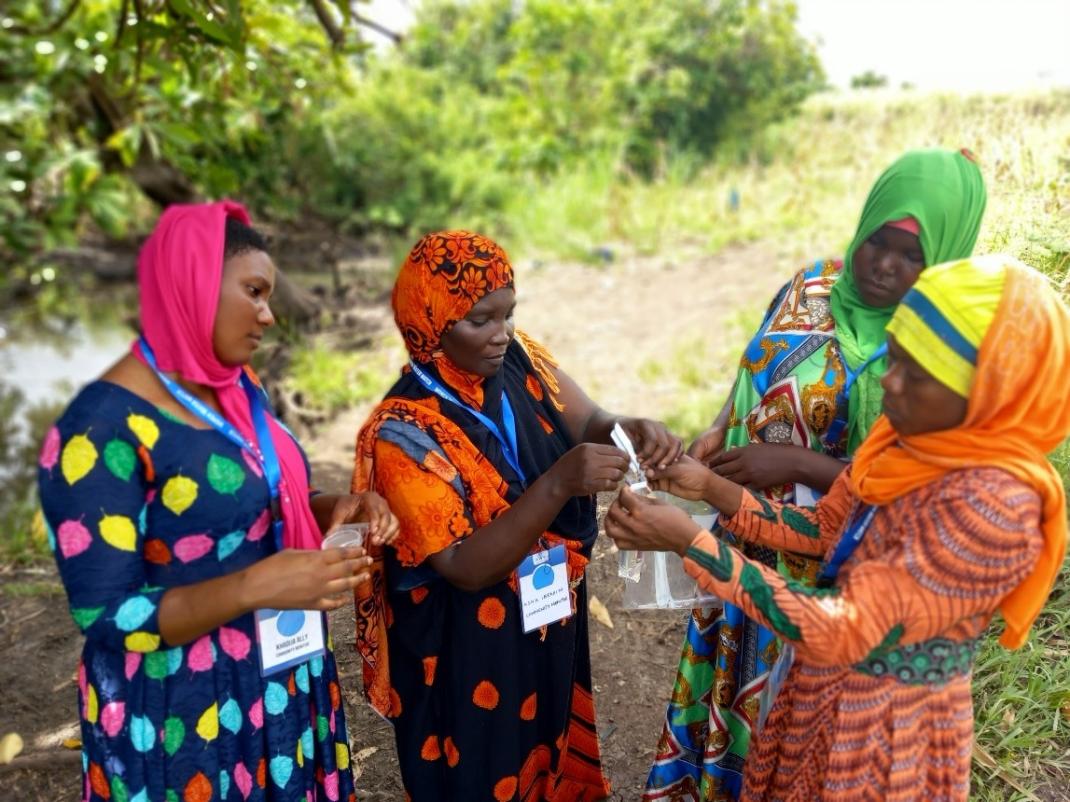
Women Water Watch monitors testing a water sample from a public water source in Tanzania. (c) Women Water Watch
What is the aim of Women Water Watch?
Nathalie Holvoet: ‘It is an action research project in which outreach and research are intertwined from the very start. We want to map water quality and water management, raise awareness within the community, and encourage behavioural change in the way water is used.’
Sara Dewachter: ‘We also want to create links with the government, which often lacks the capacity to monitor water quality everywhere. By bringing information on water quality to the responsible authorities, we hope this will lead to actions to improve that quality.’
The research highlights the importance of women and children. Why the focus on these groups?
Nathalie Holvoet: ‘Women and children are often responsible for managing water at the household level. This is linked to the division of tasks: in most cases, women are responsible for unpaid care labour and the maintenance of the household.’
Sara Dewachter: ‘Because of this responsibility, women also have knowledge about water management, but this is often overlooked. They are rarely involved in policymaking. That is why we wanted to create links between the female monitors and local policy, with a view to empowerment.’
Because of this responsibility, women also have knowledge about water management, but this is often overlooked. They are rarely involved in policymaking.
What impact do you hope to achieve for the women themselves?
Nathalie Holvoet: ‘We hope to make an impact on several levels: both individual and collective. By providing access to training and knowledge, we increase human capital; through networks, they build social capital. This can strengthen self-efficacy and contribute to their well-being and employability in the labour market.’
Sara Dewachter: ‘In the Fuatilia Maji project, we saw that citizen scientists reported afterwards that they had gained new ideas and technical skills, and had improved their presentation skills. Almost 70% felt more self-confident, 70% felt more respected by duty bearers, and 80% by fellow citizens. There was also greater interest in community work.’
And within the Women Water Watch project, how are women concretely involved?
Sara Dewachter: ‘We start with a village meeting: what are the problems related to water? After that, female monitors are selected and given training.’
Nathalie Holvoet: ‘They have jointly refined the measuring tools, and the monitors themselves carry out the data collection. They then help analyse the data and assist in its dissemination: through an online interactive data portal, but also via community meetings, discussions with duty bearers, text messages, a poster presentation at a conference in Dar es Salaam, and so on.’
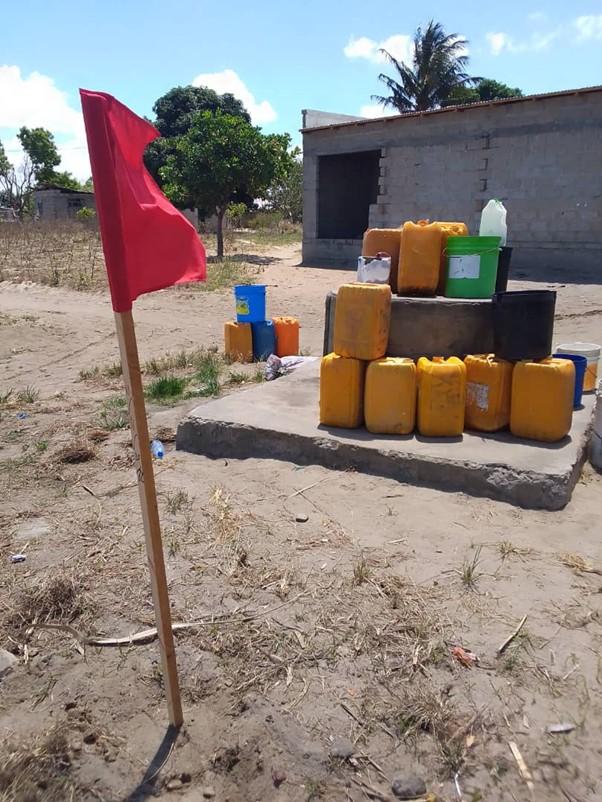
The red flag marks a polluted water source. (c) Women Water Watch
You also use creative tools such as murals, flags and radio. What is the idea behind this?
Sara Dewachter: ‘We use different tools to reach different target groups. Radio is important because research has shown that many traditional ways of communicating, such as village meetings, often have a blind spot. Women with low levels of education are then not always reached effectively.’
Nathalie Holvoet: 'By using a mix, for example radio, flags placed next to the water source, posters, or even a megaphone on a motorbike, we reduce the risk of exclusion. With children, we used a song, placards, drawings, a game… We also explored which tools they found most engaging.’
Children are also closely involved in your project. How do you reach them?
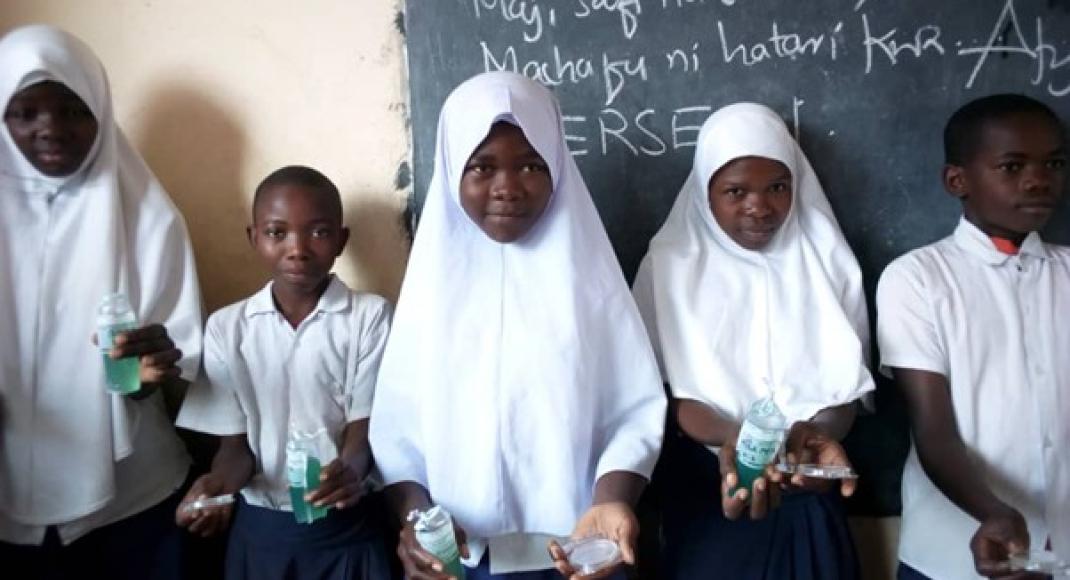
Nathalie Holvoet: ‘During school visits, we organised drawing activities, presentations, a game, and a ‘water warrior’ moment with water testing. The children tested the water they themselves drink and divided up the tasks, such as taking notes and collecting samples.’
Sara Dewachter: ‘They said they most enjoyed the game, the water test, and the water warrior badge, rating them 4.8 out of 5. They also said they learned more from those activities than from the presentation.’
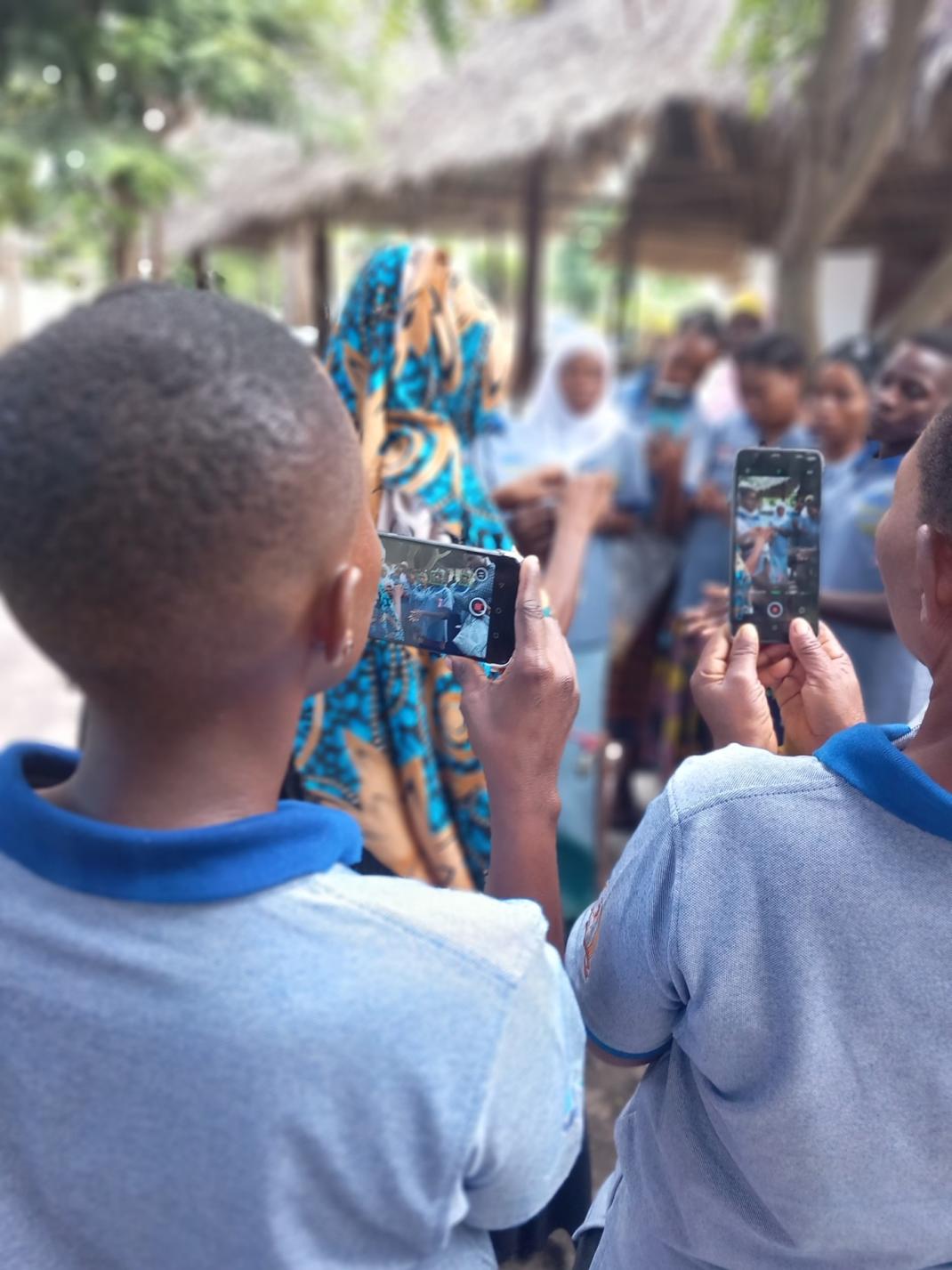
Young people learning about water quality. (c) Women Water Watch
Citizen engagement in your project is high. How do you ensure that policymakers actually make use of the data?
Nathalie Holvoet: ‘We organise meetings with local governments and universities. There are SMS updates, printed reports, and an open data portal. The data can be broken down to village level.’
Sara Dewachter: ‘We align the indicators with the needs of policymakers. Usage is tracked, but unfortunately it often remains at a conceptual level, mainly due to a lack of resources.’
What are the main lessons you take away?
Sara Dewachter: ‘Citizen science can work, especially in terms of cost-efficiency, feedback to the community, skills and awareness. But structural embedding and funding often remain limited.’
Nathalie Holvoet: ‘In Belgium, citizen science often remains limited to data collection. In the South, you see smaller projects with more intense participation. We need to learn more from different contexts. There are also lessons for universities: citizen science is still underused, funding instruments are not always well suited, but it is a good way to strengthen the bond with society.’
In Belgium, citizen science often remains limited to data collection. In the South, you see smaller projects with more intense participation.
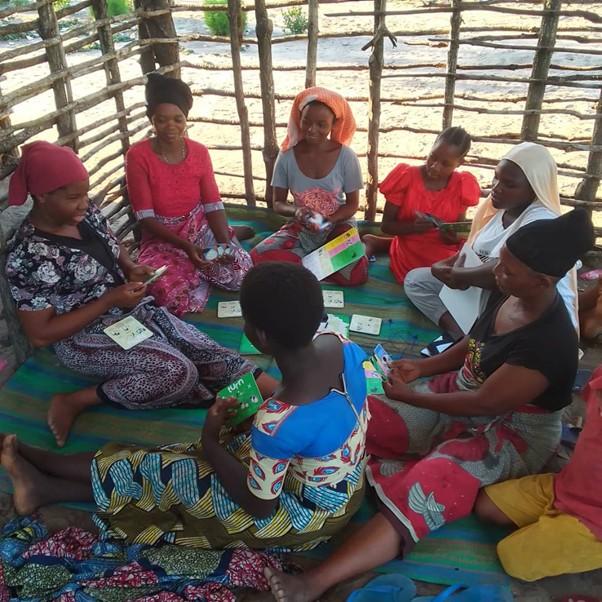
Female water monitors playing the WWW board game. (c) Women Water Watch
What does the future of the project look like?
Nathalie Holvoet: ‘We are currently still finalising the research. The funding has ended, but we have connected the women’s groups with the duty bearers and created a refresher video that enables them to carry out measurements again.’
Sara Dewachter: ‘In Fuatilia Maji, we integrated the project into a university master’s programme and worked in collaboration with the government. The programme continues to run there, and we expand it every year. A more structural embedding of citizen science within universities and governments, with adapted funding mechanisms, would be highly beneficial.’