Does Fasting Affect Your Microbiome?
Millions of microorganisms live in the vagina and gut, performing important functions for our health, including protection against infections. Under the guidance of Prof. Sarah Lebeer and clinical expert Prof. Veronique Verhoeven, Isala, the leading citizen science project at the University of Antwerp, conducted the world’s largest study on the vaginal microbiome in 2020. The ultimate goal is a better understanding of the female microbiome, which has led to several follow-up studies, known as the Isala daughter studies. These studies explore topics such as the impact of vitamins or menstrual products, as well as the inclusive citizen science project Rufaida, in which PhD student Sarah Van den Bosch, together with Dr Sarah Ahannach, investigates the effect of fasting during Ramadan on the vaginal and gut microbiomes. The Rufaida project thus establishes a unique connection between science, health, faith, and culture.
The Rufaida project takes its name from Rufaida al-Aslamia, a prominent 7th-century Muslim surgeon and nurse. Rufaida was a pioneer in scientific medical practice. Under her leadership, the first Islamic care centre with training for female nurses was established. This is a fitting name for this daughter study of Isala.
The Impact of Fasting
We know that what we eat affects our gut microbiome. You wanted to investigate whether fasting has an effect on the vaginal microbiome as well, and whether it could significantly impact both microbiomes?
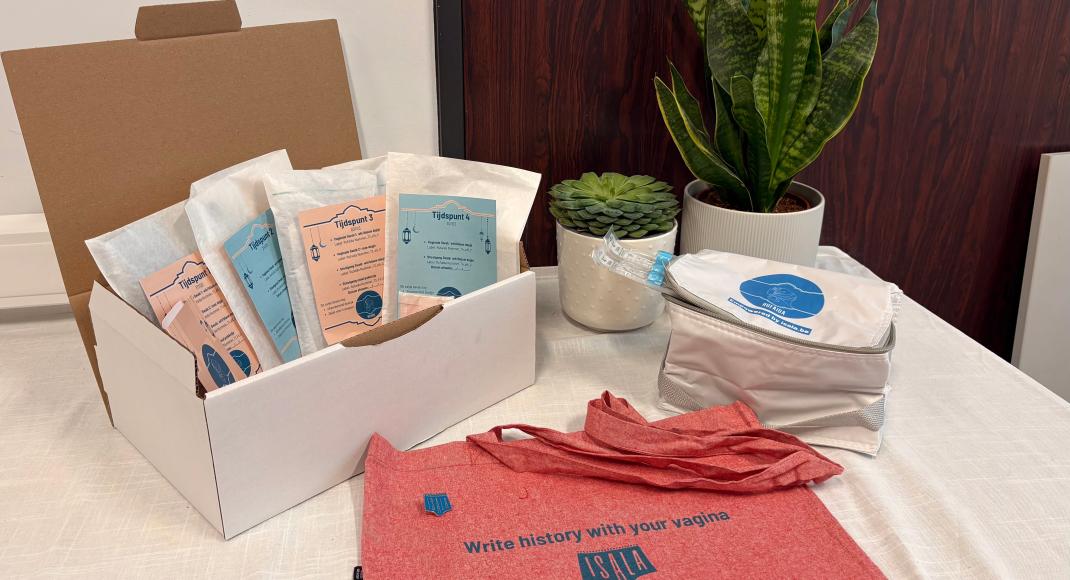
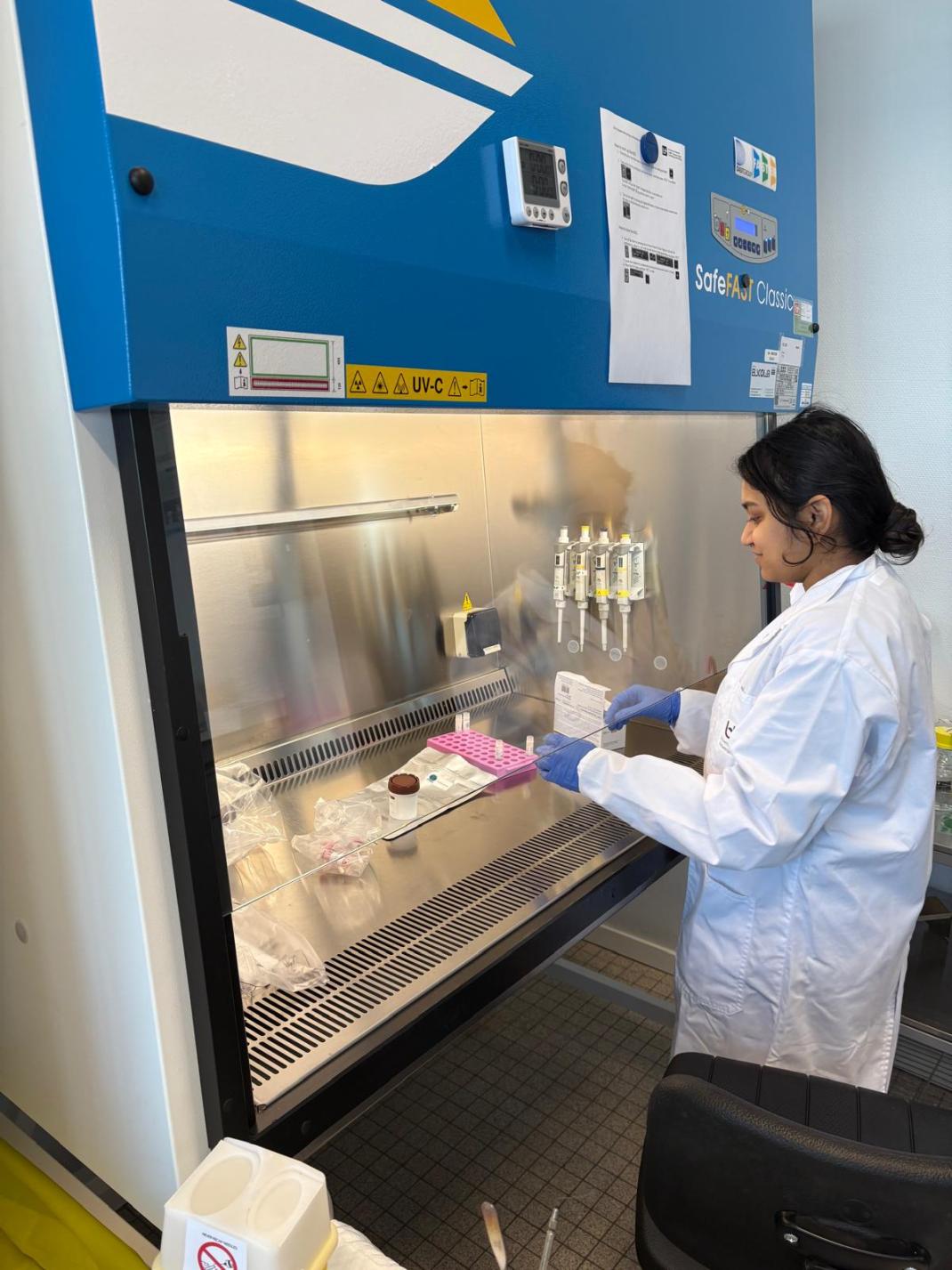
Sarah Van den Bosch: “Exactly. To develop the right approach and research questions, we conducted a pilot study in 2024 with colleagues Isabel Erreygers, Inas Rahou, and Samira El Messaoudi. Thanks to a targeted communication campaign, we received an enormous response. 245 Muslim women from very diverse backgrounds completed weekly questionnaires before, during, and after Ramadan. We not only assessed potential changes and complaints but also social wellbeing. We found that participants experienced less stress during Ramadan, felt most connected to their family and household, and more detached from colleagues and fellow students. There were also very mild gut complaints during fasting, slightly more than before and after. However, participants reported no differences in vaginal health complaints. This pilot study gave us the opportunity to conduct a more focused longitudinal study in 2025, with eight time points and two groups of around 30 participants each. Group 1 provided vaginal and stool samples and completed a detailed questionnaire, while Group 2 completed only the questionnaire about their vaginal, gut, mental, and general health, and their diet over the preceding days.”
Did you find a link between fasting and vaginal or gut microbiome health?
Sarah Van den Bosch: “Of course, we were working with a relatively small number of respondents, each with their own lifestyle, eating habits, and way of fasting. This means the results cannot automatically be generalised to all women observing Ramadan. We mainly found no evidence that fasting has a major effect. The compositions of the vaginal and gut microbiomes remain fairly stable, even after a month of fasting. Those with an optimal microbiome generally maintained it. We also examined whether there was a link between diet and which bacteria were present in the vagina. We observed only minor trends, as women who ate healthily generally continued to do so while fasting. The vaginal microbiome results aligned completely with our expectations. We had anticipated a small change in the gut microbiome. The fact we did not see this could be due to the small sample size, given that it is a complex ecosystem best studied in larger groups. International studies, mostly in men, reach similar conclusions. There is currently no scientific consensus, but the hypothesis is that our microbiome can be influenced by diet. Fasting, however, does not have a uniform effect on every individual.”
Mentally Strong
You were also interested in the effects of Ramadan on mental health and the sense of community.
Sarah Van den Bosch: “Yes, we are an interdisciplinary team, so we included mental health in our study. Among our participants, we observed a strong sense of togetherness during fasting. Sharing meals with family and household members strengthens mental health. Religion and spiritual wellbeing play a major role in overall wellbeing. So much so that we are now planning follow-up studies in other cultural groups. Under the project name ‘Nourished’, Prof. Charlotte De Backer and Dr Sarah Ahannach will, for example, investigate the impact of different food rituals on the microbiome and psychosocial wellbeing of women, such as Chinese New Year and Christian fasting.”
Starting an inclusive citizen science project comes with challenges. How did you approach them?
Sarah Van den Bosch: “We worked closely with the student association Niyyah, who helped enormously with sample collection and outreach. Half of the participants were students, and in total, we involved Muslim women from 22 diverse cultural backgrounds, mainly Moroccan and Turkish. Working with Niyyah was crucial. Their connection with the community helped us determine the right tone, which media to use, and how to communicate our results in a unique way. For example, we organised an iftar/mini-symposium in a safe and connecting atmosphere. Two successful iftars have already taken place, the last with nearly 100 participants. The interest and enthusiasm of Niyyah were contagious for the wider community, enabling us to achieve age diversity within our study population. Collaborating with an established partner embedded in the community is undoubtedly an asset.”
Which media did you use?
Sarah Van den Bosch: “We started with social media to establish a base platform, then approached traditional press. A key moment was our segment on the VRT news, which showed the study was serious. It acted as a kind of stamp of approval. We also used flyers and posters, and thanks to Niyyah, we knew where to distribute them. However, word of mouth remained the most important factor.”
For those wishing to start an inclusive citizen science project: go ahead, and do not be afraid to make your target audience truly diverse and inclusive. Citizen science is stronger when it reflects society and is representative.
Tact and Clarity
Research on the vaginal and gut microbiome requires tact and sensitivity.
Sarah Van den Bosch: “We were dealing with intimate data, so it is important to pay attention to that. We used clear, unambiguous language in our questions, for example: ‘Do you experience vaginal pain?’ We provided an opt-out for sensitive questions, so participants could choose whether to answer and always feel comfortable. We also made it clear that our study was not investigating their religious beliefs.”
What advice do you have for those wanting to start an inclusive citizen science project?
Sarah Van den Bosch: “Go ahead, and do not be afraid to make your audience truly diverse and inclusive. Citizen science is stronger when it reflects society and is representative. Engaging different ethnicities is a challenge and requires flexibility, for example, co-creating questionnaires with your target group, but the impact is much greater. Soon, recordings about our project will be released for the University of Flanders podcast, a perfect opportunity to learn even more.”
Interview and text: Hilde Devoghel (Tales and Talks)
Translation: Sanne Strouven