Scivil Releases Citizen Science Scan 2023
Scivil launches Belgium's very first Citizen Science Scan. This report provides insights into the state, nature, and developments of citizen science in Belgium, and includes recommendations for policymakers and researchers. For this report, Scivil analyzed no less than 150 Belgian projects in which citizens actively contributed to scientific research.
Scivil is often asked how many citizen science projects there actually are. We had to leave that question unanswered for a long time—until now. The Citizen Science Scan 2023 investigates active citizen science initiatives in Belgium.
The report analyzes 150 projects and answers questions such as:
- Which topics are commonly addressed, and which themes are on the rise?
- Who are the initiators and their funders?
- How many partners does a project have, and what expertise do they bring?
- How many citizens participate, and how do they contribute to the research?
- ...
In this way, Scivil's Citizen Science Scan provides, for the first time, a complete picture of citizen science in Belgium.
Download the reportGet Started Yourself
The underlying data of the Citizen Science Scan is publicly available for anyone who wants to conduct additional analyses or in-depth research. Whether you're interested in specific research topics, collaborations, or trends in citizen engagement, the dataset can help you create targeted analyses that align with your own projects or ideas. Want to get started yourself? You can find the full dataset here.
Download the datasetMake Your Project Known
Was your project not included in the Citizen Science Scan 2023? Or are you launching a new initiative soon? Let us know, and we'll include your project in the next edition.
Fill in the survey!Topics and Initiators
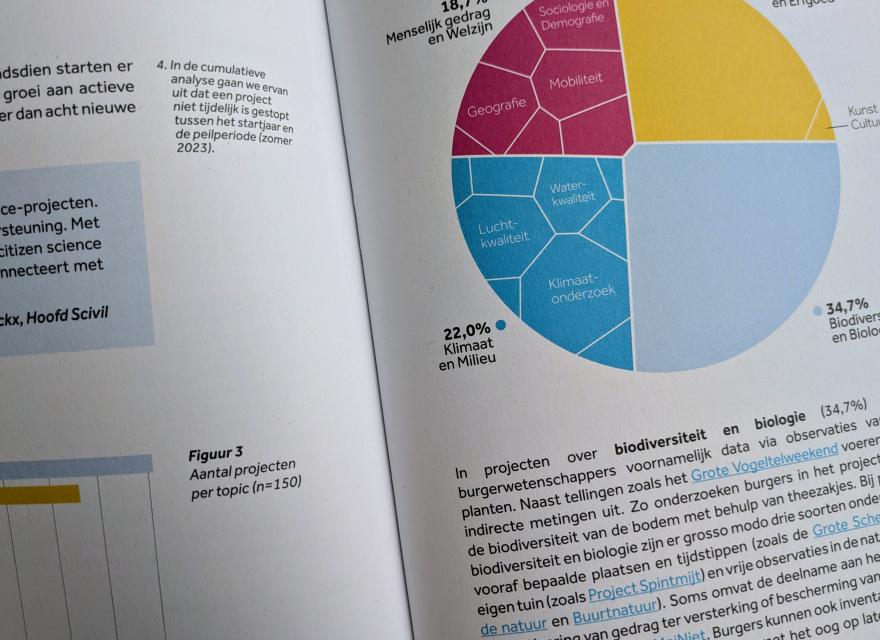
In 2023, you could participate in 150 different projects in Belgium. One in three projects (35%) focuses on biology and biodiversity, the second-largest group (25%) deals with archaeology and history, and climate and the environment rank third (22%). Traffic counts are also common, but there are less obvious research topics such as Flemish dialects or the Earth's magnetic field.
Most projects are initiated by government institutions (such as archives, museums, libraries, and research institutes), non-profit organizations, and universities. One in three projects collaborates with schools, involving students in research conducted in their own environment, such as measuring air quality in the classroom or analyzing their cycling route to school.
It is estimated that citizens have participated at least one million times in a Belgian citizen science project. In nine out of ten projects, citizens can participate in Dutch, making Flanders a leading region for citizen science in Europe.

Visuals: Koen Van den Eeckhout - Baryon