Building bridges through boardgames: Tackling sexual violence
Street harassment and violence (against women) remain pressing contemporary issues. The feeling of insecurity and danger still prevents many individuals from feeling free and safe on the streets and in public spaces. In response, RHEA (the Expertise centre for Gender, Diversity and Intersectionality at VUB) and ZIJkant have developed a game about sexual harassment, co-created with young adults: City Confessions. Scivil interviewed Danielle Shirley Fernandes, PhD researcher from Communities against Violence / City Confessions (part of RHEA), about her insights and experiences in developing this unique board game designed to address and educate about sexual violence.
Understanding the project and the game
Sexual violence remains a contentious issue. What made you think of a board game to tackle this issue?
Danielle Shirley Fernandes: I’m a PhD researcher at VUB, focusing on sexual violence. I met Julie from ZIJkant, a Brussels-based NGO, and we started discussing the city’s needs from a young woman’s perspective. Topics like safer and more comfortable spaces for women came up, which naturally led to discussions about violence. The consensus was the need for community education on violence and how to respond to it, aiming to change societal norms. We thought an interactive approach would be ideal, and thus, the idea of creating a game emerged. This game would teach people about identifying and stopping sexual violence.
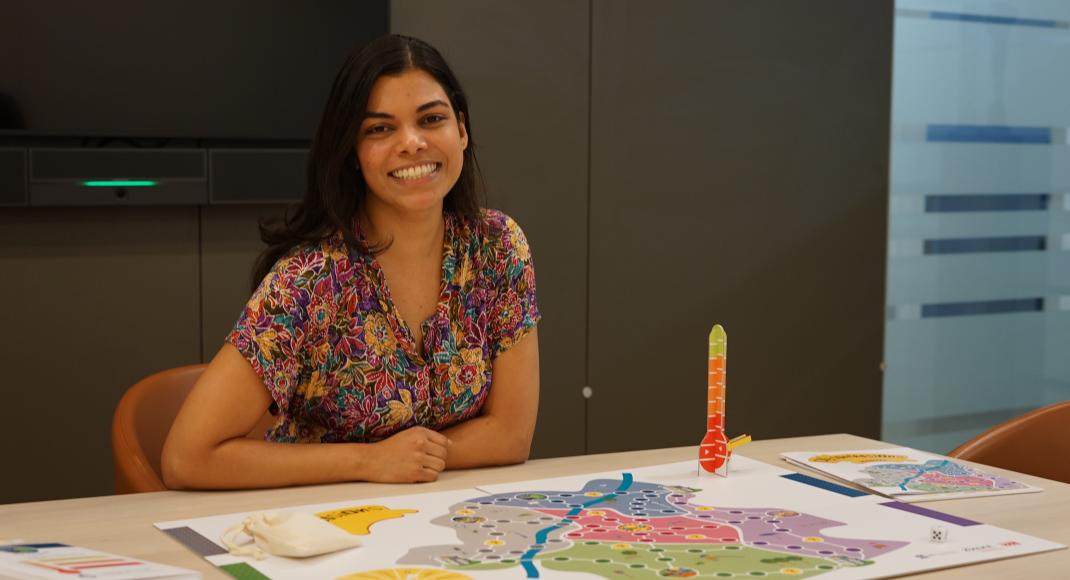
City Confessions is a board game co-created with young adults to address the issue of sexual harassment. It aims to bridge gaps in understanding the experiences and struggles others may have, and to encourage people to help each other. It teaches both empathy and actionable responses to violence, creating a space for solidarity. The game draws from the community, working with young women and their authentic experiences, ensuring it reflects real-life scenarios.
Building bridges with real experiences
Danielle Shirley Fernandes: We wanted to make the game drawing from the community, working with young women and their authentic experiences. Because of the citizen science approach, we first qualified for two grants; The first grant came from Impetus, a citizen science accelerator, and the second from the city of Brussels. These grants helped us develop the idea of a boardgame, with the involvement of young women in the community, shaping the project through workshops and discussions.
The project began in June 2023 with the initial workshops. Our current grant lasts until November, and in this time we aim to conduct more detailed evaluations and train trainers in different organisations.
Group effort
What was your inspiration for a project around the subject of ‘violence’?
Danielle Shirley Fernandes: My background is in public health, where I frequently encountered violence-related issues. All of my projects had a relation to violence; I’ve worked on the topic of alcohol abuse and violence, of sex education and violence. And personally, I’ve also experienced violence, particularly in nightlife spaces. This blend of professional and personal motivation drove me to focus on this project, aiming to foster understanding of each other’s experiences and perspectives.
So you surrounded yourself with a team of young women. What exactly did these volunteers do?
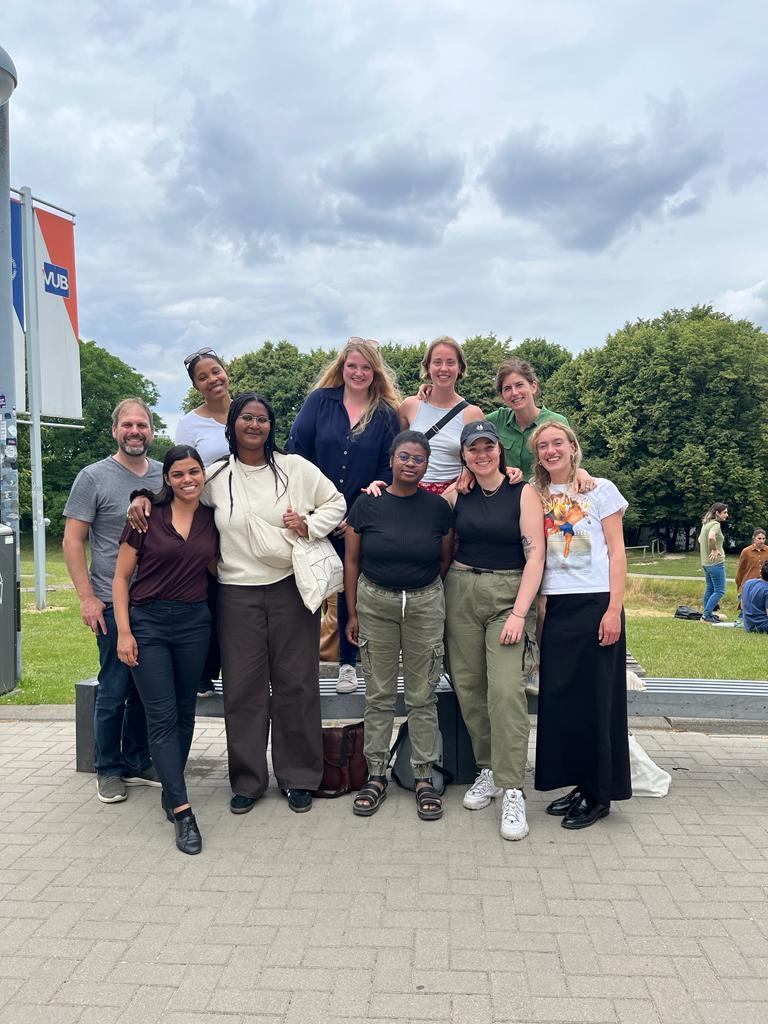
Danielle Shirley Fernandes: We started with the idea of a game on violence against women. To make the project as authentic as possible, we wanted to base it on real experiences. Through the networks of ZIJkant and RHEA, my research group, we put an advert on social media and we reached out to the students at VUB. This was a deliberate choice for a citizen science approach. We didn’t exclude men from participating, but maybe the topic of ‘sexual violence’ sparked more interest in women than in men. We ended up with a team of seven highly motivated and engaged young women.
They were involved in every step of the way; they defined the project’s scope, shared ideas, helped create a prototype, gave feedback and wrote out the cases of the game with us. It really was entirely a team effort. They’re even involved in the dissemination of the game. In this stage of the project, we’re training trainers in different organisations. When we can, we have one of the volunteers speak there as well.
We started with the idea of a game on violence against women. To make the project as authentic as possible, we wanted to base it on real experiences. This was a deliberate choice for a citizen science approach
Challenges and thriumphs
Did you face any challenges?
Danielle Shirley Fernandes: Translating complex concepts like intersectional perspectives, all our differences into a game, was challenging. We wanted to avoid stigmatising anyone, so we designed scenarios that prompted discussion without targeting individuals. Emotions also played a significant role, both in the game’s content and during its creation. Navigating these emotions could be quite tricky. I remember one conversation during the development of the game. We were talking about victim blaming, and of course all of us came to the conclusion that you don’t blame the person that has experienced violence. But then one of the young women said that she blamed herself. We got to the bottom of our emotions by fostering open, empathetic discussions and integrating emotional reflection into the whole process.
What is your personal takeaway from this project?
Danielle Shirley Fernandes: For me, the project has taught me things on different levels. First off: I learned a lot about game mechanics. You don’t realise this when you play a game, but every choice you make has an intricate meaning. In our game, for instance, we couldn’t simply put that the outside world is unsafe and the goal is to get home safe, because of course not all city spaces are dangerous and not everyone is safe from violence at home. Every game mechanic that we chose had all this meaning behind it.
Secondly, I’ve realised the importance of emotions in research, what emotions and experiences I bring to the table, and what emotions I take away from the process. I’ve learned to embrace vulnerability and to use it to empower and connect with others.
Future directions
What brings the future for the project?
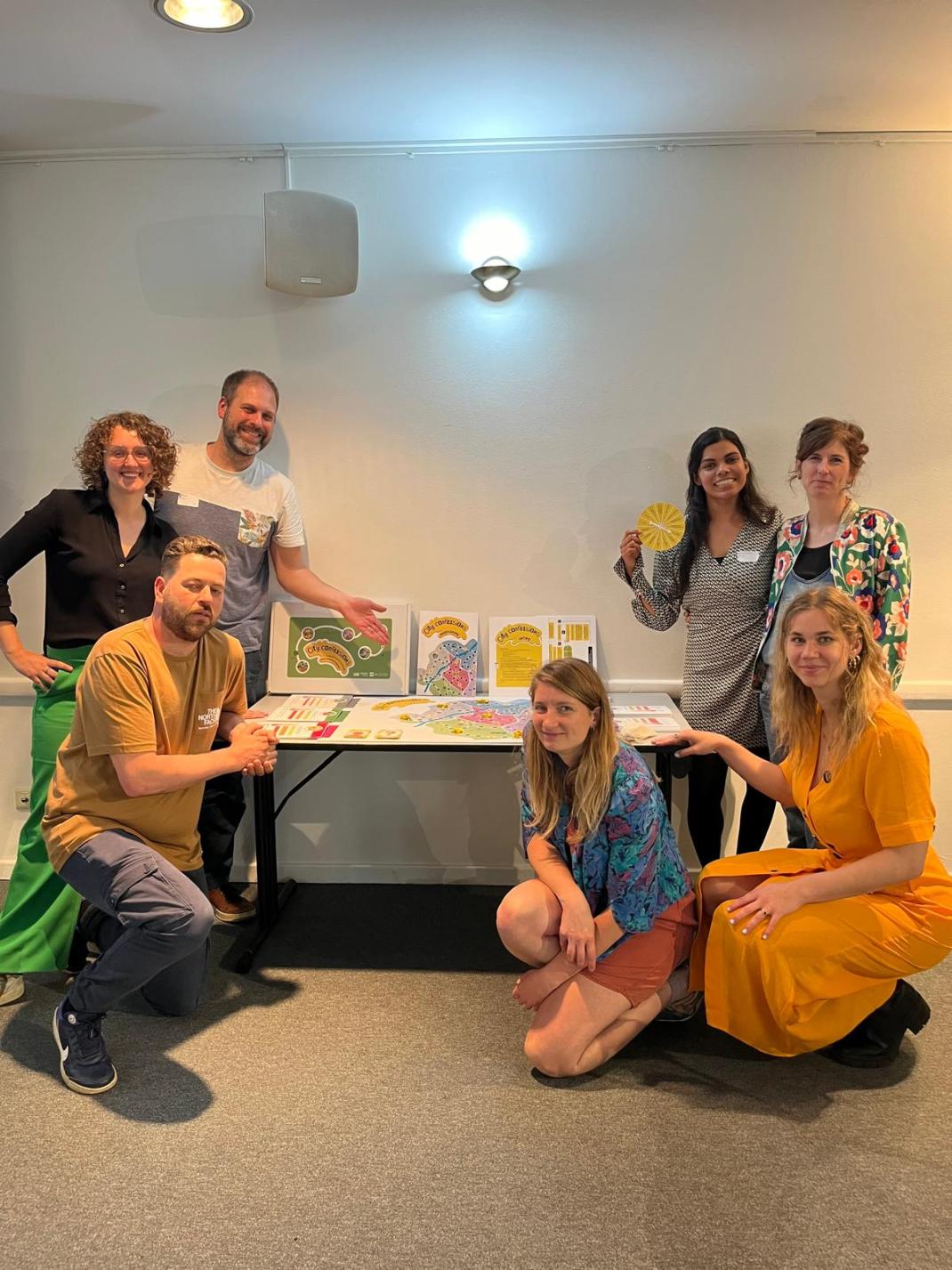
Danielle Shirley Fernandes: The board game is finished and we’ve conducted a preliminary evaluation. We now want to implement the game in youth organisations, universities, and cities, offering train-the-trainer sessions to ensure effective facilitation. Collecting user data remains a challenge, but we're working to integrate evaluation into the sessions seamlessly.
And now that the game is finished, where can people participate or purchase one?
Danielle Shirley Fernandes: If you’re interested in using City Confessions, you have three options. You can purchase a copy of the game and just use it by following the instructions in the manual. For more guidance to navigate the tricky discussion around sexual violence, you can also choose to have someone from ZIJkant vzw or De Aanstokerij facilitate a game session. Additionally, we offer train-the-trainer sessions where we train you to facilitate the game sessions. We’ve also chosen to make the game available in Dutch, French, and English, reflecting the multilingual nature of Brussels, in the hopes it reaches and helps educate many people.
Photographs: Danielle Shirley Fernandes / Karen Verstraelen (Scivil)