Citizen Science Networking Day 2024: register now! - Scivil
minskyString.search.closeLabel
minskyString.search.triggerLabel
On September 12, Scivil organizes a Citizen Science Inspiration and Networking Day which will take place at Lamot in Mechelen. This year, we are organising the networking day in collaboration with FARO, Histories, and the AfricaMuseum. Similar to the previous edition, you can expect an inspiring opening panel, a series of interesting talks and workshops covering various aspects of citizen science, and a pleasant networking lunch, this time with a poster session.
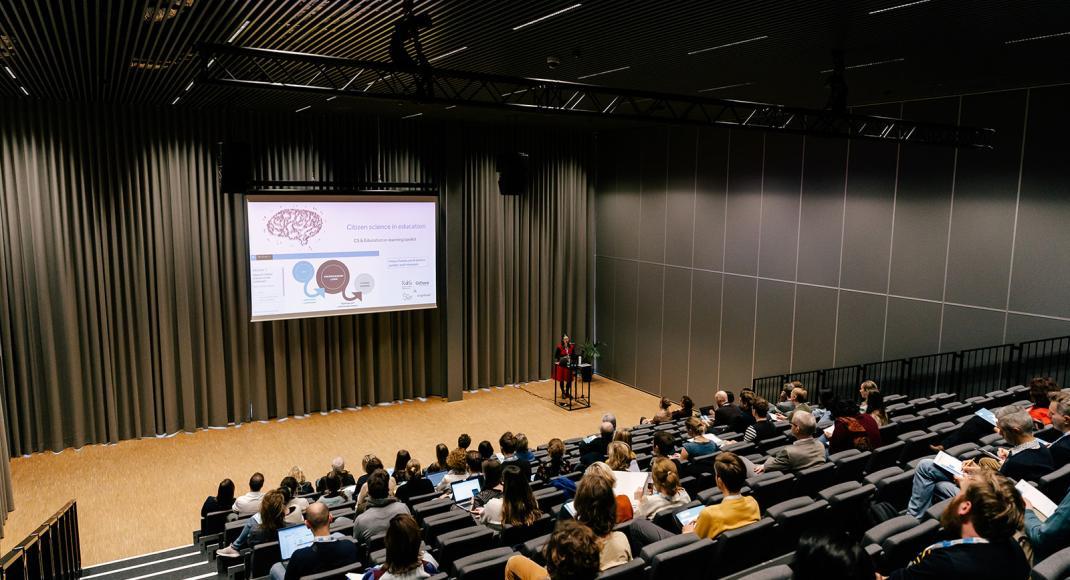
We offer many fascinating citizen science sessions on themes such as working with the media, inclusion and diversity, how to start with citizen science, and practical examples from health research and social sciences. This edition we also put an extra spotlight on the heritage sector. Within heritage there is a long tradition of collaboration with volunteers, whether or not in the form of citizen science. Through the collaboration with FARO, Histories and the AfricaMuseum, we want to ensure inspiring cross-pollination between citizen science and heritage.
Sessions take place in Dutch and English. The programme offers sessions for beginners in citizen science as well as for experienced initiators looking for more depth.
Participation is free. Are you registered, but can't come? Let us know as soon as possible and avoid a no-show fee (50 EUR).
The programme and registration link can be found below or download it via this link.
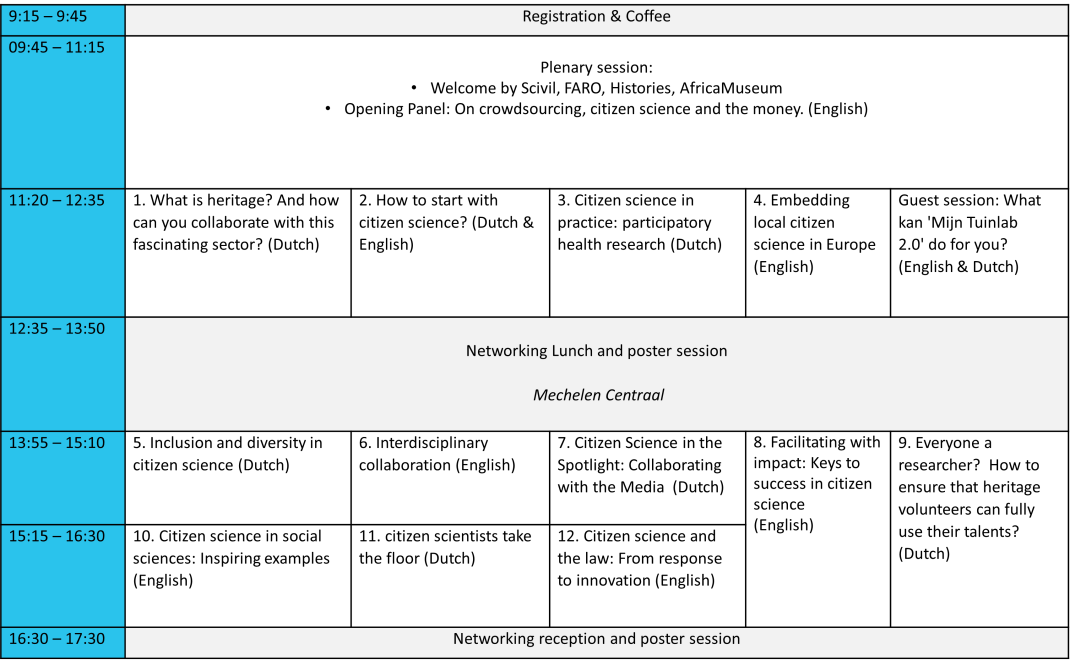
Below you will find more details about the programme with the different breakout sessions for which you can register per time block.
Registration of attendance.
Panellists:
Moderator: Hilde Devoghel (Tales and Talks)
This panel will elaborate on the various ways in which citizens can contribute to scientific research through citizen science. Besides discussing successful crowdsourcing initiatives, the panel will also discuss how citizens can be involved in other ways. This will cover barriers to participate, including funding for projects. The aim is to gain a broader understanding of the role of citizens in science and how their participation can be further encouraged.
Between 11h20 and 12h35 you can attend one of the following sessions.
1. What is heritage? And how to collaborate with this fascinating sector (Dutch)
Presentation and workshop
In this interactive session, you will discover what we understand by the term ‘heritage’ today. Using concrete examples, you will learn what kind of tasks heritage workers have. We introduce you to different types of heritage organisations and tell you why they are interested in citizen science. We give practical tips on how to cooperate with them. Finally, we share some successful citizen science projects from this sector, so that you leave with a lot of inspiration.
This session will take place in Dutch.
2. How to start with citizen science? (Dutch and English)
Presentations and open discussion
This session provides an introduction to citizen science. Many concrete examples and methods from various disciplines are discussed. You will learn practical aspects for setting up your own initiative and discover how citizen science can be relevant to your organisation or area of interest.
3. Citizen science in practice: participatory health research (Dutch)
Presentations and open discussion
Discover how citizen science is transforming health research practice. This session explores how citizens are actively participating in research on health issues, using inspiring case studies. You will be introduced to the following projects:
4. Embedding Local Citizen Science in Europe (English)
Workshop
Find out how to connect your local or regional citizen science project to the European level and what support is available. Meet the European Citizen Science Project, the eu-citizen.science platform, and the European Citizen Science Association 'ECSA'. Together with Belgian and Flemish initiatives such as Scivil, iedereenwetenschapper.be, and the Federal citizen science network we explore how we can better align these different levels and contribute to an inclusive and strong European citizen science community.
Guest session: What kan 'Mijn Tuinlab 2.0' do for you as a researcher? (English and Dutch)
Workshop
'Mijn Tuinlab' is a citiizen science platform supporting research in and about gardens. Researchers can recruit participants, organise surveys and share results with citizen scientists via the Mijn Tuinlab platform. Mijn Tuinlab gathers data on gardens and strives for a more biodiverse and climate friendly garden landscape. At this time, the Mijn Tuinlab team is working on a new and more efficient version of the platform: 'Mijn Tuinlab 2.0'. This update will bring more capabilities to project initiators: set up your own surveys, access open data on gardens, create a project timeline, integrate elements of gamification, and more... Everyone who wants to learn more about (the future of) Mijn Tuinlab is welcome in this session. Additionally, we'd like to learn how Mijn Tuinlab can help you as a (garden) researcher.
Between 13h55 and 15h10 you can attend one of the following sessions.
5. Inclusion and diversity in citizen science (Dutch)
Presentations and open discussion
During this workshop, discover the 'Leave No One Behind' Toolkit from CityObs – Leiden University. Get to know different approaches for inclusive citizen involvement in science and think about relevant methods and how and when to use them.
6. Interdisciplinary collaboration: Our heritage to cross boundaries between disciplines and citizens (English)
Heritage research bridges different disciplines. From this, new knowledge and applications emerge. Moreover, heritage touches on emotions and thus sets citizens in motion. What are the benefits of interdisciplinary cooperation? How do you use emotional charge to set citizens in motion? And what are possible pitfalls? You will learn in this session using inspiring heritage case studies.
Presentations and open discussion
7. Citizen Science in the Spotlight: Collaborating with the media (Dutch)
Panel discussion
Discover how effective collaboration between citizen science projects and the media can lead to broader engagement and impact. During this session, a university press officer, a journalist and a successful citizen science project share their experiences for building fruitful relationships with the media.
This session will take place in Dutch.
8. 13h55 - 16h30 : Facilitating with impact: Keys to success in citizen science (English)
Extended workshop - Please note that this workshop continues during parallel session 3!
In this workshop, discover the essential skills for facilitating group processes in citizen science. Learn when to best use moderation skills, how to get started, and how to actively listen to increase engagement. You will have the opportunity to present your own concrete challenge to the group and get started on it.
9. 13:55 - 16:30 : Everyone a researcher? How to ensure that heritage volunteers can use their talents to the full? (Dutch)
Extended workshop - Please note that this workshop continues during parallel session 3!
The cultural heritage sector has a long tradition of involving volunteers. In research projects, they are often given a limited role. And that is a pity, because they often have much more to offer. In this session, we present a tool to better think about the different roles volunteers can take on. Based on concrete personas, we will discuss how to make choices and how to vary them. Moreover, together we will discuss the best way to guide these people. We close with ten very practical tips that you can put to work straight away.
This session will take place in Dutch.
Between 15h15 and 16h30 you can attend one of the following sessions.
10. Citizen science in social sciences: Inspiring examples (English)
Presentations
Discover inspiring examples of citizen science within the social sciences during this session:
11. Citizen scientists take the floor (Dutch)
Panel discussion
During this panel discussion, we delve into the minds of Frank, Myriam, Walter, Nadine and Willy, each a true citizen scientists. Who are they, which projects are they involved in, and why do they participate? The volunteers open up about their motivation, the personal impact of their participation and the lessons they have learned. Furthermore, they dissect the communication, recruitment, thresholds, rewards, etc. of their citizen science projects.
This session will take place in Dutch.
12. Citizen science and the law: From response to innovation (English)
Panel discussion
This session will explore the many dimensions of the law in relation to citizen science. What are legal considerations when setting up a project and what can be the legal implications of running it? What laws and regulations do you need to consider? But also: how can citizen science and the law reinforce each other? How can citizen science innovate the legal framework? Discover examples and discuss possible solutions for challenging cases.
During the reception, you can chat over snacks and drinks. The posters will also be on display.
Info about the poster session
A poster session will also take place in the same room during lunch and the closing reception. Would you like to put your own citizen science project in the spotlight? Would you like to look for ideas, feedback or partners for a new project? Would you like to share your participatory experiences with the other attendees as a conversation starter? Present it on a poster during this poster session! Submit your poster idea using this form.
Participants who present a poster can use our poster printing service. We will bring your printed poster to the networking day. To do so, you must email your poster to us by August 30 at the latest.
If there is enough interest, we would like to organise a free training in August on how to create compelling posters to present your research results or participatory method.
Poster size: A1 portrait / portrait